Tom Stoppard Dead at 88: Legendary Playwright Behind Rosencrantz and Guildenstern Are Dead, Shakespeare in Love Passes Away
Tom Stoppard, the Tony Award and Oscar-winning playwright who revolutionized theater with Rosencrantz and Guildenstern Are Dead, The Real Thing, and Shakespeare in Love, has died at age 88 in Dorset, England on November 29, 2025.
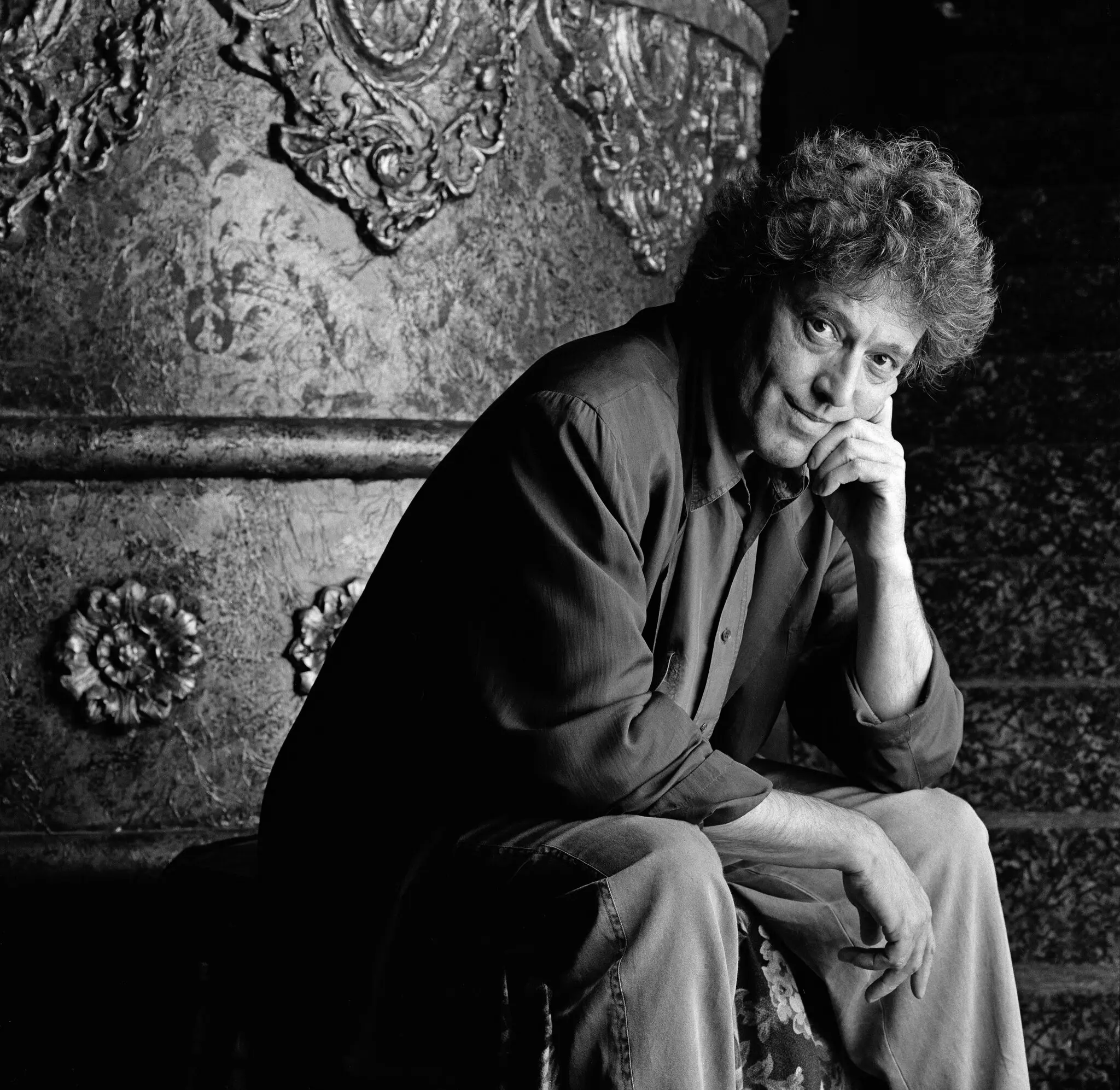
Tom Stoppard Dead at 88: Theater Legend and Oscar Winner Passes Away
Tom Stoppard, the legendary playwright who transformed modern theater with intellectually ambitious works like Rosencrantz and Guildenstern Are Dead, The Real Thing, and Arcadia, has died at his home in Dorset, England. He was 88 years old.
The death was announced on November 29, 2025 by United Agents, his longtime representatives, though no cause of death was immediately provided. Stoppard's passing marks the end of an extraordinary six-decade career that earned him four Tony Awards, one Academy Award, countless accolades, and critical comparisons to Shakespeare, George Bernard Shaw, and Samuel Beckett.
From his breakthrough 1966 absurdist comedy reimagining Hamlet through minor characters to his deeply personal 2020 play Leopoldstadt about his Jewish heritage, Tom Stoppard redefined what theater could be—blending philosophical depth with wit, historical events with contemporary relevance, and cerebral complexity with genuine emotional power.
His influence extended beyond the stage into film, where his Oscar-winning screenplay for Shakespeare in Love (1998) brought his signature wordplay and romantic sensibility to mainstream audiences worldwide.
Tom Stoppard Cause of Death: What We Know
Tom Stoppard died at his home in Dorset, England on November 29, 2025, according to a statement released by United Agents.
Death Announcement Details:
Official Statement: United Agents confirmed Stoppard's passing but provided no specific cause of death or additional medical details, respecting the family's privacy during this difficult time.
Age at Death: 88 years old
Location: Dorset, England (where Stoppard had lived for many years)
Date: November 29, 2025
As of this publication, Stoppard's family has not released details regarding funeral arrangements, memorial services, or specific health issues that may have preceded his death. Given his advanced age, natural causes are presumed, though this has not been officially confirmed.
The playwright had remained relatively active in recent years, with his semi-autobiographical play Leopoldstadt running on Broadway as recently as 2022-2023, winning the Tony Award for Best Play.
Who Was Tom Stoppard? The Playwright Who Revolutionized Modern Theater
Sir Tom Stoppard (born Tomáš Sträussler on July 3, 1937) was a Czech-born British playwright and screenwriter whose intellectually ambitious works made him one of the most celebrated dramatists of the 20th and 21st centuries.
Early Life and Background:
Birth Name: Tomáš Sträussler
Born: July 3, 1937, in Zlín, Czechoslovakia (now Czech Republic)
Family Background: Born into a Jewish family, Stoppard's early life was shaped by World War II upheaval. His family fled the Nazi occupation of Czechoslovakia when he was just two years old, eventually settling in Singapore.
Escape from WWII: In 1942, when Japanese forces invaded Singapore, Stoppard's mother and her two sons (Tom and his older brother Peter) were evacuated to India. Tragically, his father remained behind and was killed during the Japanese occupation.
Name Change: His mother later married British Army Major Kenneth Stoppard, and young Tomáš became "Tom Stoppard," the name under which he would achieve global fame.
Education: Stoppard's formal education ended at age 17, making his later reputation as the most cerebral and erudite playwright in the English language all the more remarkable. He was largely self-taught, a voracious reader who absorbed philosophy, science, history, and literature through independent study.
Career Beginnings:
Early Work: Stoppard began as a journalist in Bristol, England, writing theater reviews and news stories while developing his playwriting skills on the side.
First Plays: His early one-act plays attracted little attention, but he persisted, driven by a fascination with language, ideas, and the theatrical possibilities of exploring complex philosophical questions through drama.
Rosencrantz and Guildenstern Are Dead: The Play That Changed Everything
Tom Stoppard's career breakthrough came in 1966 with the premiere of Rosencrantz and Guildenstern Are Dead, a wildly inventive reimagining of Shakespeare's Hamlet told from the perspective of two minor characters.
The Concept:
In Hamlet, Rosencrantz and Guildenstern are barely-there courtiers—friends of Prince Hamlet who appear briefly, are manipulated by King Claudius, and are eventually sent to their deaths. Shakespeare gives them minimal characterization and even less stage time.
Stoppard's genius was to ask: What were these two doing when they weren't onstage in Hamlet? What did they think was happening? What was their experience of these famous events?
The Result:
Rosencrantz and Guildenstern Are Dead is an absurdist tragicomedy in which the two bewildered courtiers stumble through events they don't understand, speaking in witty philosophical exchanges while the famous scenes from Hamlet happen around them (and occasionally intrude upon them).
Key Themes:
- The randomness of fate and death
- The absurdity of existence (heavily influenced by Samuel Beckett's Waiting for Godot)
- Free will versus determinism
- The nature of identity and memory
- Theater as a metaphor for life
Critical Reception:
The play premiered at the Edinburgh Festival Fringe in 1966 and transferred to London's National Theatre in 1967, where it became an instant sensation.
Critics compared the 29-year-old Stoppard to Shakespeare himself, praising the play's verbal brilliance, philosophical depth, and darkly comic examination of mortality.
Awards:
- Tony Award for Best Play (1968) when it transferred to Broadway
- Established Stoppard as a major theatrical voice overnight
Cultural Impact:
Rosencrantz and Guildenstern Are Dead has been performed thousands of times worldwide and remains a staple of high school and college theater programs. The 1990 film adaptation, directed by Stoppard himself, starred Gary Oldman and Tim Roth.
The play's influence on postmodern theater cannot be overstated—it pioneered the concept of taking minor characters from classic works and giving them their own stories, a technique countless playwrights and novelists have since employed.
Tom Stoppard's Greatest Plays: A Legacy of Theatrical Brilliance
While Rosencrantz and Guildenstern launched his career, Stoppard went on to write dozens of plays across nearly six decades, each demonstrating his remarkable range and intellectual ambition.
The Real Thing (1982)
What It's About: A contemporary drama about Henry, a successful playwright, and his relationship with Annie, an actress. The play examines the intersection of love, art, fidelity, and the difference between "real" emotion and performed emotion.
Why It Matters: Unlike his earlier cerebral works, The Real Thing is Stoppard's most emotionally direct play, exploring love and betrayal with vulnerability and honesty.
Awards:
- Tony Award for Best Play (1984)
- Olivier Award for Best New Play (1983)
Notable Productions: The play has been revived multiple times, with acclaimed productions starring Jeremy Irons, Glenn Close, Ewan McGregor, and Maggie Gyllenhaal.
Arcadia (1993)
What It's About: Set on an English country estate in both 1809 and the present day, Arcadia weaves together two time periods as characters in the past pursue knowledge while characters in the present attempt to reconstruct that past. The play explores chaos theory, thermodynamics, landscape architecture, poetry, and the limits of human knowledge.
Why It's a Masterpiece: Many critics and scholars consider Arcadia Stoppard's greatest achievement—a perfect marriage of intellectual complexity and emotional power, scientific inquiry and romantic longing.
Themes:
- The relationship between past and present
- How knowledge is created, preserved, and lost
- The contrast between Classical and Romantic worldviews
- Entropy and the arrow of time
- The comedy of scholarly misinterpretation
Awards:
- Olivier Award for Best New Play (1993)
- Evening Standard Award for Best Play
Critical Praise: The New Yorker called it "the greatest play of the last quarter-century," while scholars continue to publish academic papers analyzing its scientific and philosophical dimensions.
Travesties (1974)
What It's About: Set in Zurich during World War I, Travesties imagines encounters between James Joyce, Vladimir Lenin, and Tristan Tzara (founder of the Dada movement) as recalled by Henry Carr, a minor British consular official.
The Stoppard Touch: The play is structured like Oscar Wilde's The Importance of Being Earnest but filled with debates about art, politics, and revolution. It's simultaneously a farce, a philosophical argument, and a meditation on memory's unreliability.
Innovation: Travesties showcased Stoppard's ability to blend historical figures with fictional narrative, a technique he would return to throughout his career.
The Coast of Utopia (2002)
What It's About: An epic trilogy (Voyage, Shipwreck, Salvage) following Russian intellectuals and revolutionaries in the 19th century, including Alexander Herzen, Mikhail Bakunin, and Ivan Turgenev.
Scope: With 70+ characters across three plays totaling nine hours of performance, The Coast of Utopia represents Stoppard's most ambitious theatrical undertaking.
Themes: The play examines political idealism, the cost of revolution, personal versus political commitments, and the ways intellectual movements shape history.
Awards:
- Tony Award for Best Play (2007) - all three parts cited together
- Drama Desk Award for Outstanding Play
Broadway Production: The 2006-2007 Lincoln Center production featured an all-star cast including Billy Crudup, Ethan Hawke, and Jennifer Ehle.
Leopoldstadt (2020)
What It's About: Stoppard's most personal play, Leopoldstadt traces a prosperous Jewish family in Vienna from 1899 through the Holocaust and beyond, exploring themes of assimilation, identity, and the destruction of European Jewry.
Personal Connection: The play draws directly on Stoppard's own Jewish heritage, which he only learned about as an adult. Many family members perished in the Holocaust.
Awards:
- Tony Award for Best Play (2023) - Stoppard's fourth Tony for Best Play
- Olivier Award for Best New Play (2020)
Significance: Written when Stoppard was in his 80s, Leopoldstadt represents a full-circle moment—the playwright who spent his career exploring abstract ideas finally confronting his own family history.
Critical Reception: Called "devastating," "masterful," and "Stoppard's most human play," Leopoldstadt earned near-universal acclaim and ran successfully on both Broadway and the West End.
Tom Stoppard's Film Career: Shakespeare in Love and Beyond
While primarily known for theater, Tom Stoppard's contributions to cinema are equally impressive, particularly his Oscar-winning screenplay for Shakespeare in Love.
Shakespeare in Love (1998)
What It Is: A romantic comedy imagining William Shakespeare suffering from writer's block while trying to write Romeo and Juliet. He falls in love with Viola de Lesseps, a noblewoman who disguises herself as a man to perform in his plays, and their romance inspires his greatest work.
Stoppard's Contribution: Co-written with Marc Norman, the screenplay is filled with Stoppard's signature wit, literary references, and playful exploration of the relationship between life and art.
Box Office: The film grossed $289 million worldwide and became a cultural phenomenon.
Awards:
- Academy Award for Best Original Screenplay (1999) - Stoppard's only Oscar
- Golden Globe for Best Screenplay
- BAFTA Award for Best Film
The film also won Best Picture at the Academy Awards, controversially defeating Saving Private Ryan.
Legacy: Shakespeare in Love introduced Stoppard's wordplay and intellectual approach to a mainstream audience, making him one of the few playwrights to achieve both critical acclaim and commercial success in Hollywood.
Other Film Work:
Brazil (1985): Co-wrote this dystopian sci-fi masterpiece with director Terry Gilliam
Empire of the Sun (1987): Adapted J.G. Ballard's autobiographical novel for Steven Spielberg
Billy Bathgate (1991): Adapted E.L. Doctorow's gangster novel
Anna Karenina (2012): Adapted Tolstoy's classic novel for director Joe Wright
Television: Stoppard also wrote acclaimed TV plays including Professional Foul (1977) and Parade's End (2012), a World War I miniseries starring Benedict Cumberbatch.
Tom Stoppard Awards: Four Tonys, One Oscar, and Countless Honors
Tom Stoppard is one of the most decorated playwrights in history, with awards spanning six decades.
Major Awards:
Tony Awards (4 wins):
- 1968: Rosencrantz and Guildenstern Are Dead (Best Play)
- 1976: Travesties (Best Play)
- 1984: The Real Thing (Best Play)
- 2007: The Coast of Utopia (Best Play)
- 2023: Leopoldstadt (Best Play) - making him the oldest playwright to win a Tony for Best Play at age 85
Academy Award:
- 1999: Shakespeare in Love (Best Original Screenplay)
Olivier Awards (Multiple wins):
- The Real Thing (1983)
- Arcadia (1993)
- The Invention of Love (1998)
- Leopoldstadt (2020)
Other Honors:
- Knighted in 1997 by Queen Elizabeth II, becoming Sir Tom Stoppard
- Order of Merit (2000) - one of Britain's highest honors, limited to 24 living members
- PEN/Pinter Prize (2013)
- Jerusalem Prize (2017) for writers concerned with freedom of the individual
Broadway Record:
Stoppard holds the distinction of having plays running on Broadway across six different decades (1960s, 70s, 80s, 90s, 2000s, 2020s), a testament to his enduring relevance.
Tom Stoppard's Influence on Modern Theater and Playwrights
Tom Stoppard's impact on contemporary drama is immeasurable. His work opened new possibilities for what theater could explore and how it could be structured.
Innovation in Playwriting:
Intellectual Accessibility: Stoppard proved that plays dealing with philosophy, quantum mechanics, chaos theory, and political history could be entertaining, moving, and commercially successful.
Structure: His plays often feature:
- Multiple time periods happening simultaneously
- Real historical figures interacting with fictional characters
- Self-reflexive elements where characters discuss theater itself
- Dense verbal wit and rapid-fire dialogue
- Scientific or mathematical concepts as dramatic devices
Influence on Other Writers:
Playwrights who cite Stoppard as an influence include:
- David Auburn (Proof)
- Michael Frayn (Copenhagen)
- Aaron Sorkin (screenwriter known for rapid dialogue)
- Lauren Gunderson (America's most-produced playwright)
Academic Impact:
Stoppard's plays are among the most studied in university drama and English programs worldwide. Scholars have published hundreds of academic papers analyzing his work from perspectives including:
- Philosophy and ethics
- Scientific accuracy and metaphor
- Postmodern narrative techniques
- Adaptation theory
- Political theater
Tom Stoppard Personal Life: Marriages, Family, and Later Years
Despite his public acclaim, Tom Stoppard remained relatively private about his personal life, though some details are known.
Marriages and Children:
First Marriage: Jose Ingle (1965-1972), a nurse
- Children: Sons Oliver and Barnaby Stoppard
Second Marriage: Miriam Stoppard (1972-1992), a doctor and television personality
- Children: Sons William and Edmund Stoppard
Third Marriage: Sabrina Guinness (2014-2025), a television producer
- Stoppard was 77 when they married
Children's Careers:
Several of Stoppard's sons followed creative paths:
- Ed Stoppard became a successful actor, appearing in films and TV including Upstairs Downstairs
- Will Stoppard works in film and television production
Jewish Heritage Discovery:
One of the most significant revelations in Stoppard's life came when he learned as an adult that his family was Jewish and that many relatives had perished in the Holocaust. This discovery profoundly affected his later work, particularly Leopoldstadt.
In interviews, Stoppard described feeling a "retrospective solidarity" with his Jewish heritage while acknowledging his primarily British cultural identity.
Political Views:
Stoppard was known for his anti-communist stance and support for dissidents in Eastern Europe, particularly Czech playwright Václav Havel (who later became President of Czechoslovakia). His play Professional Foul (1977) dealt with political repression in communist Czechoslovakia.
Theater World Reacts to Tom Stoppard's Death
News of Stoppard's passing prompted an outpouring of tributes from across the theatrical world.
Expected Tributes:
Broadway Theaters: Major Broadway theaters are expected to dim their lights in honor of Stoppard, a tradition reserved for theater's most significant figures.
National Theatre (London): Where Rosencrantz and Guildenstern Are Dead premiered in 1967, the National Theatre will likely host memorial events and special performances of his work.
West End: London's theater district, where many Stoppard plays premiered, is expected to organize tribute performances.
Statements from Theater Leaders:
While specific statements are still emerging, tributes typically come from:
- The American Theatre Wing (Tony Awards organization)
- Dramatists Guild of America
- Society of London Theatre
- Royal Shakespeare Company
- Major theatrical producers and directors
Tom Stoppard's Final Play: Leopoldstadt's Lasting Impact
Leopoldstadt (2020) stands as Tom Stoppard's likely final major work, making his death even more poignant as the play deals explicitly with legacy, memory, and the Holocaust.
The Play's Journey:
London Premiere: January 2020 at Wyndham's Theatre (West End)
Broadway Transfer: October 2022 at the Longacre Theatre
Run: The Broadway production closed in July 2023 after 340 performances
Awards:
- Tony Award for Best Play (2023)
- Olivier Award for Best New Play (2020)
Why Leopoldstadt Matters as a Final Statement:
At age 82 when it premiered, Stoppard created his most autobiographical work, finally addressing his Jewish heritage and the Holocaust that claimed family members he never knew.
Key Themes:
- The assimilation of Jews into European society before WWII
- The illusion of safety for prosperous Jewish families
- The devastating impact of the Holocaust
- Memory, forgetting, and the responsibility to remember
- Identity and what it means to be Jewish
Critical Consensus: Reviewers called Leopoldstadt Stoppard's most emotionally direct play, praising how he balanced his signature intellectual rigor with raw emotional power.
Personal Nature: Unlike his earlier works that examined ideas through historical or fictional characters, Leopoldstadt was explicitly about Stoppard's own family history—a remarkable act of vulnerability from a playwright known for intellectual distance.
What Happens to Tom Stoppard's Plays Now? The Theatrical Legacy
Tom Stoppard's death does not diminish his theatrical presence—in fact, his plays will likely experience a resurgence of productions worldwide as theaters honor his legacy.
Immediate Impact:
Revival Productions: Expect major theaters to announce revivals of Stoppard's greatest works:
- Rosencrantz and Guildenstern Are Dead
- Arcadia
- The Real Thing
- Travesties
- Leopoldstadt
Film Re-releases: Streaming platforms may feature the 1990 Rosencrantz and Guildenstern Are Dead film and other adaptations.
Educational Institutions: High schools and universities will likely increase productions of his work, introducing new generations to his plays.
Long-Term Legacy:
Canonical Status: Stoppard's major works are already considered part of the theatrical canon—essential plays that will be performed for generations, much like works by:
- William Shakespeare
- Anton Chekhov
- Tennessee Williams
- Arthur Miller
- Samuel Beckett
Publishing: Expect collected editions, critical studies, biographies, and academic analyses to proliferate in coming years.
Archives: Stoppard's papers, manuscripts, and correspondence will become invaluable resources for scholars studying 20th and 21st-century theater.
Tom Stoppard Quotes: The Playwright's Wit and Wisdom
Stoppard was as quotable offstage as his characters were onstage. Here are some of his most memorable insights:
On Writing:
"I write plays because writing dialogue is the only respectable way of contradicting yourself."
On Theater:
"The theater is a place where one has time for the problems of people to whom one would show the door if they came to one's office for a job."
On Truth:
"If you carry your childhood with you, you never become older."
On Art and Politics:
"Skill without imagination is craftsmanship and gives us many useful objects such as wickerwork picnic baskets. Imagination without skill gives us modern art."
From Rosencrantz and Guildenstern Are Dead:
"We cross our bridges when we come to them and burn them behind us, with nothing to show for our progress except a memory of the smell of smoke, and a presumption that once our eyes watered."
On Life:
"Age is a high price to pay for maturity."
Remembering Tom Stoppard: A Playwright Who Made Theater Think
Tom Stoppard's death at 88 closes a chapter in theatrical history that began in 1966 with two bewildered courtiers from Hamlet and ended in 2020 with a Jewish family in Vienna facing annihilation.
In between, he wrote plays that made audiences laugh, think, and feel—often simultaneously. He proved that theater could be intellectually rigorous without being inaccessible, emotionally moving without being sentimental, and politically engaged without being didactic.
What Made Stoppard Unique:
✨ Intellectual Range: From quantum mechanics to literary criticism, from political philosophy to romantic poetry, Stoppard's plays ventured fearlessly into vast fields of knowledge.
✨ Verbal Brilliance: His dialogue sparkled with wit, wordplay, and linguistic inventiveness that made even complex ideas entertaining.
✨ Structural Innovation: His plays broke conventional narrative structures, weaving together multiple time periods, perspectives, and realities.
✨ Emotional Depth: Despite his cerebral reputation, Stoppard's best plays—The Real Thing, Arcadia, Leopoldstadt—contain profound emotional truth.
✨ Timeless Relevance: His plays continue to speak to new generations because they address fundamental human questions about knowledge, love, mortality, and meaning.
Final Thought:
In Arcadia, one character says: "It's the wanting to know that makes us matter." This could serve as Tom Stoppard's epitaph—a playwright who never stopped wanting to know, never stopped questioning, and who made theater a place where the biggest questions could be asked with wit, intelligence, and heart.
Sir Tom Stoppard (1937-2025): A theatrical giant whose plays will continue to challenge, delight, and inspire audiences for generations to come.
Sources:
- United Agents Official Statement
- The New York Times: Tom Stoppard Obituary
- Tony Awards Official Records
- Academy of Motion Picture Arts and Sciences
- National Theatre Archive
For more breaking entertainment news, theater coverage, and cultural obituaries, follow Mindspilll.