Denny's Closing Restaurants: 150 Locations Shutting Down as Iconic Breakfast Chain Sold for $620 Million in Private Equity Deal
Denny's is closing up to 150 restaurants across the US by end of 2025 after confirming $620 million sale to private equity. Find out which locations are closing, why the iconic breakfast chain is struggling, and what happens next.
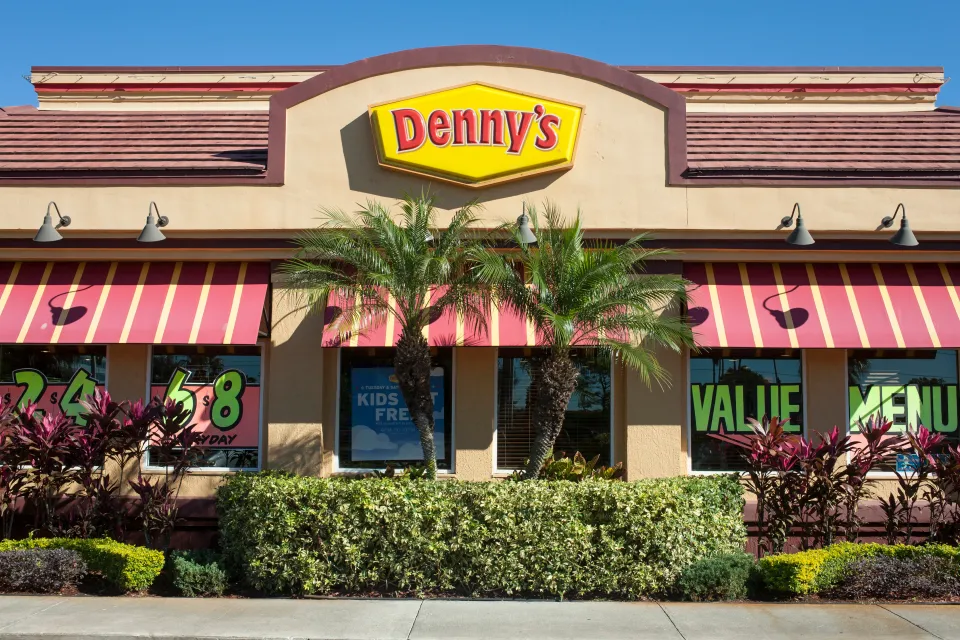
Denny's Closing 150 Locations: Beloved Breakfast Chain Sold as Restaurants Shut Down
Denny's is closing up to 150 restaurants across the United States by the end of 2025, the iconic breakfast chain confirmed, as it simultaneously announced a $620 million sale to private equity investors that will take the 72-year-old company private.
The closures represent nearly 10% of Denny's total locations and come as the beloved 24-hour diner struggles with changing consumer dining habits, competition from healthier breakfast chains, and ongoing recovery challenges from the COVID-19 pandemic that devastated sales.
Most recently, a Denny's location in Santa Rosa, California quietly closed its doors at the Coddingtown Mall, leaving customers with only a sign directing them to the nearest remaining location. The sudden closure came just weeks after Denny's announced its sale to TriArtisan Capital Advisors, Treville Capital, and Yadav Enterprises in a deal expected to close in the first quarter of 2026.
For millions of Americans who grew up eating Grand Slam breakfasts and late-night Moons Over My Hammy, the news marks the end of an era for a restaurant that's been synonymous with American diner culture since 1953.
Which Denny's Locations Are Closing? What We Know
Denny's has confirmed up to 150 locations will close by the end of 2025, though the company has not released a comprehensive list of specific restaurants shutting down.
Recent Denny's Closures Confirmed:
Santa Rosa, California - Coddingtown Mall Location:
- Closed: Late November 2025
- Reason: Part of the broader closure plan affecting underperforming locations
- Impact: Leaves Santa Rosa with only one remaining Denny's restaurant
- Customer Notice: Sign on door directed patrons to nearest open location
Why Denny's Won't Announce All Closing Locations:
Denny's has been strategically quiet about which specific restaurants will close, similar to other chains conducting mass closures. This approach:
- Prevents panic among employees at locations that may remain open
- Avoids immediate drops in customer traffic at soon-to-close stores
- Allows individual locations to announce closures on their own timeline
- Gives local management time to reassign employees or provide severance
How to Find Out If Your Local Denny's Is Closing:
Check for These Warning Signs:
✅ Reduced Hours: Locations scaling back from 24-hour service to limited hours ✅ Staff Shortages: Frequent "short-staffed" notices or limited sections open ✅ Maintenance Issues: Deferred repairs, broken equipment, or worn interiors ✅ Menu Limitations: Reduced menu options or frequent "out of stock" items ✅ Empty Parking Lot: Noticeably fewer customers than neighboring restaurants
Direct Contact:
- Call your local Denny's and ask directly about closure plans
- Check the restaurant's social media pages for announcements
- Ask staff members (though they may not always have advance notice)
Denny's Locations Most At Risk:
The 150 closures will target "lowest-performing locations," according to company statements. Restaurants most likely to close include:
Underperforming Urban Locations:
- Stores in high-rent areas with declining foot traffic
- Downtown locations that lost office worker lunch business post-pandemic
- Older restaurants requiring expensive renovations
Mall-Based Restaurants:
- Locations inside struggling shopping malls (like the Coddingtown Mall closure)
- Food court Denny's with declining mall traffic
- Restaurants dependent on mall hours rather than 24-hour operations
Redundant Locations:
- Cities with multiple Denny's too close together
- Areas where one location cannibalizes another's sales
- Markets with oversaturation from the chain's expansion era
Rural Struggling Locations:
- Small-town restaurants with insufficient population density
- Locations on highways with declining traffic due to route changes
- Stores in economically depressed areas
Denny's Sale: $620 Million Private Equity Deal Explained
Denny's is being sold for $620 million (including debt) to a consortium of investors in a deal that will take the publicly traded restaurant chain private.
Who's Buying Denny's?
Three Investment Groups:
TriArtisan Capital Advisors:
- Private equity investment firm
- Co-Founder and Managing Director Rhohit Manocha called Denny's "an iconic piece of the American dream"
- Specializes in restaurant and retail turnarounds
Treville Capital:
- Investment firm focused on undervalued public companies
- Sees potential for Denny's growth under private ownership
Yadav Enterprises:
- One of Denny's largest franchisees
- Already operates multiple Denny's locations
- Brings operational expertise to the deal
Deal Terms and Shareholder Payout:
Per Share Price: $6.25 per share in cash
Total Shareholder Payout: $322 million
Total Deal Value: $620 million (including existing debt)
Board Approval: Unanimously approved by Denny's board of directors
Shareholder Vote Required: Yes (expected early 2026)
Expected Closing: First quarter of 2026
What Does "Going Private" Mean for Denny's?
Taking Denny's private means the company will no longer be traded on the New York Stock Exchange, where it's been listed since 1969.
Advantages of Going Private:
✅ No Quarterly Earnings Pressure: Private companies don't face Wall Street's demand for constant quarterly growth, allowing long-term strategic planning
✅ Reduced Reporting Requirements: Fewer regulatory filings and public disclosures required
✅ Freedom to Restructure: Can close underperforming locations, renovate stores, and test new concepts without stock price penalties
✅ Long-Term Investment: Private equity can invest in technology, menu innovation, and restaurant upgrades without short-term profit concerns
Potential Disadvantages:
❌ Less Transparency: Public won't see financial performance reports ❌ Potential Cost-Cutting: Private equity sometimes reduces staff or benefits to improve profitability ❌ Debt Load: Buyout deals often involve taking on significant debt
What the New Owners Say About Denny's Future:
Rhohit Manocha (TriArtisan Co-Founder) released a statement emphasizing:
"We look forward to working with Kelli and the rest of the Denny's team and franchisees to provide resources and support the Company's long-term strategic growth plans."
Denny's CEO Kelli Valade said the board believed the deal was "in the best interest of shareholders and the best path forward for the company."
Valade also revealed Denny's reached out to more than 40 potential buyers and received multiple offers before accepting this deal.
Why Is Denny's Closing? The Struggles Behind the Sale
Denny's decision to close 150 locations and sell the company stems from several interconnected challenges that have plagued the chain for years.
COVID-19 Pandemic Devastation:
Like many casual dining chains, Denny's saw sales plummet during COVID-19:
- 24-hour operations became impossible during lockdowns
- Late-night dining (a core Denny's strength) evaporated
- Senior customers (key demographic) avoided restaurants for health reasons
- Breakfast traffic declined as people worked from home
- Many locations permanently ended 24-hour service
Recovery has been slower than expected because customer habits changed permanently during the pandemic.
Changing Customer Dining Patterns:
Post-pandemic dining looks different:
✅ Delivery Dominance: Customers increasingly order through DoorDash, Uber Eats, and Grubhub rather than dining in
✅ Breakfast at Home: Work-from-home employees make breakfast at home instead of stopping at Denny's
✅ Health-Conscious Choices: Younger consumers seek healthier options than traditional diner fare
✅ Fast-Casual Appeal: Chains like Panera and Sweetgreen attract customers seeking "better-for-you" meals
✅ Digital Ordering: Customers prefer mobile ordering and pickup over traditional table service
Denny's traditional model—sit-down service, extensive menus, and comfort food—doesn't align as well with these new preferences.
Competition from Healthier Breakfast Chains:
Denny's has struggled as newer chains promoted healthier breakfast options:
First Watch:
- Focuses on fresh ingredients and "daytime dining"
- Appeals to health-conscious millennials and Gen Z
- Rapidly expanding with modern, bright restaurant designs
- Offers avocado toast, quinoa bowls, and fresh juices alongside traditional breakfast
Other Competitors:
- IHOP: Aggressively marketing and partnering with Applebee's for dual-brand locations
- Cracker Barrel: Combines dining with retail, creating additional revenue stream
- Local Breakfast Spots: Independent restaurants stealing market share with unique, locally-sourced menus
Denny's menu still focuses heavily on traditional comfort food like pancakes, hash browns, and hearty breakfasts—delicious but not aligned with "wellness" trends.
24-Hour Model No Longer Profitable:
Denny's built its reputation on being open 24/7, but this model has become increasingly difficult:
- Overnight shifts are hard to staff amid labor shortages
- Late-night customers generate less revenue per hour than breakfast/lunch
- Security concerns and safety issues at late-night locations
- Higher utility and labor costs for round-the-clock operations
Many Denny's locations permanently ended 24-hour service and now close between midnight and 5:00 AM.
Aging Infrastructure and Real Estate:
Many Denny's restaurants are decades old:
- Outdated decor and design don't appeal to younger customers
- Expensive renovations needed to modernize aging locations
- Costly repairs for aging equipment and infrastructure
- Prime real estate leases in high-rent areas no longer profitable
Franchise Model Challenges:
Of Denny's 1,558 restaurants worldwide:
- Most are franchised (owned by independent operators)
- Franchisees may lack capital for needed renovations
- Corporate has limited control over location improvements
- Underperforming franchisees drag down brand reputation
How Many Denny's Locations Are There? Restaurant Count Breakdown
As of Q2 2025 (end of second quarter), Denny's had 1,558 restaurants worldwide.
Denny's Restaurant Portfolio:
Total Restaurants: 1,558
Breakdown:
- Denny's Restaurants: 1,422 locations
- Keke's Breakfast Cafe: 74 locations (acquired by Denny's in 2022)
- International Locations: 136 restaurants outside the U.S.
After 150 Closures:
Projected Restaurant Count (End of 2025): Approximately 1,408 locations
Percentage of Total: 150 closures represent about 9.6% of total locations
Where Are Denny's Restaurants Located?
United States: Vast majority of locations
International Presence:
- Canada
- Mexico
- Puerto Rico
- Philippines
- United Arab Emirates
- Honduras
- El Salvador
- Guatemala
- Costa Rica
- Venezuela
- Japan
- New Zealand
Strongest Markets:
- California (highest number of locations)
- Texas
- Florida
- Arizona
- Nevada
Denny's History: From Danny's Donuts to American Icon
Denny's has been serving American comfort food for over 70 years, making the current struggles particularly poignant for loyal customers.
Denny's Timeline:
1953: Founded as Danny's Donuts in Lakewood, California by Harold Butler and Richard Jezak
1959: Renamed Denny's Coffee Shops to avoid confusion with another chain (Coffee Dan's)
1961: First Denny's franchise opened
1969: Began trading on the New York Stock Exchange (where it remained until the pending 2026 sale)
1977: Expanded to over 1,000 locations
1980s-1990s: Rapid expansion across the U.S. and internationally
1994: Company faced racial discrimination lawsuits that resulted in significant settlements and policy changes
2000s: Introduced "Always Open" campaign emphasizing 24-hour operations
2022: Acquired Keke's Breakfast Cafe, a Florida-based breakfast chain
2024: Announced plan to close 150 underperforming locations
2025: Confirmed $620 million sale to private equity consortium
Iconic Menu Items That Defined Generations:
Grand Slam Breakfast:
- Introduced in 1977
- Two eggs, two bacon strips, two sausage links, and two pancakes
- Became Denny's signature offering
Moons Over My Hammy:
- Grilled sourdough sandwich with ham, scrambled eggs, and cheese
- Late-night favorite since the 1980s
Super Bird:
- Turkey, bacon, and Swiss on grilled sourdough
- Named after Plymouth's "Superbird" muscle car
Build Your Own Grand Slam:
- Customizable breakfast introduced in the 2010s
- Modernized the classic for picky eaters
Cultural Impact:
Denny's became more than a restaurant—it's a cultural touchstone:
✅ Late-Night Haven: Where teenagers hung out after prom, concerts, or parties ✅ Road Trip Staple: Reliable comfort food on highway exits nationwide ✅ Family Tradition: Multigenerational Sunday breakfast destination ✅ Pop Culture Presence: Featured in movies, TV shows, and comedy routines ✅ Social Media Darling: Denny's Twitter account became famous for surreal, humorous posts
Other Restaurant Closures in 2025: Industry-Wide Struggles
Denny's is far from alone in closing locations and facing financial struggles. The casual dining industry is experiencing widespread challenges.
Major Restaurant Chains Closing Locations in 2025:
Red Lobster:
- Closures: Over 100 stores closing
- Reason: Bankruptcy filing, leadership change
- New CEO: Damola Adamolekun taking over restructuring efforts
TGI Friday's:
- Closures: 30+ locations closed in April 2025 alone
- Reason: Bankruptcy filing
- Status: Still shuttering additional locations
Applebee's:
- Closures: 20 to 35 locations projected for 2025
- Strategy: Teaming up with IHOP for dual-branded locations
- Concept: Combined menu of both chains' best items
Noodles & Company:
- Closures: 17 to 21 locations in 2025
- Reason: Difficult 2024 financial performance
- Struggle: Competition from fast-casual pasta competitors
Romano's Macaroni Grill (Olive Garden Rival):
- Closures: Majority of locations closed
- Reason: Bankruptcy filing
- Impact: Near-total shutdown of the chain
Arby's:
- Closures: 14 locations shut down
- Notable: Closed a 55-year-old flagship location
- Status: Ongoing restructuring
Why Are So Many Restaurants Closing in 2025?
Industry-Wide Challenges:
✅ Labor Shortages: Difficulty finding and retaining staff post-pandemic
✅ Rising Costs: Food costs, wages, and rent increasing faster than revenue
✅ Delivery Economics: Third-party delivery apps take 20-30% commission, squeezing margins
✅ Changing Preferences: Younger customers prefer fast-casual over sit-down dining
✅ Debt Burdens: Many chains took on debt during COVID and can't repay it
✅ Private Equity Pressure: PE-owned chains often struggle with debt loads from buyouts
✅ Oversaturation: Too many locations competing for same customers
What Happens to Denny's Employees When Locations Close?
The closure of 150 Denny's restaurants will impact thousands of employees, from servers and cooks to managers and support staff.
Typical Process for Restaurant Closures:
Advance Notice (Varies):
- Some employees get weeks or months of notice
- Others find out days before closure
- Hourly employees often receive less notice than salaried managers
Severance Packages:
- Not guaranteed for hourly restaurant workers
- Salaried employees may receive severance based on tenure
- Varies by location and franchise vs. corporate ownership
Transfer Opportunities:
- Employees may be offered positions at nearby Denny's locations
- Transfers depend on available positions and distance
- No guarantee of same hours, shifts, or pay rate
Unemployment Benefits:
- Laid-off workers typically eligible for unemployment insurance
- Duration and amount vary by state
- Must actively seek new employment to maintain benefits
Resources for Affected Denny's Workers:
Job Placement:
- Other restaurant chains often hire experienced diner staff
- Competitors like IHOP, Cracker Barrel, and Waffle House frequently hiring
- Fast-food and fast-casual chains need experienced workers
Training Programs:
- Workforce development programs offer free training
- Community colleges provide hospitality and culinary programs
- Online courses for career transitions
Will More Denny's Locations Close After 2025?
While 150 closures are confirmed for 2025, the question remains: Will the new private equity owners close additional locations?
Factors That Could Lead to More Closures:
Private Equity Restructuring:
- New owners may conduct deeper analysis and close more underperforming stores
- Goal will be profitability over market presence
- PE firms often prioritize efficiency over expansion
Continued Industry Decline:
- If casual dining continues struggling, more closures likely
- Economic recession could accelerate location shutdowns
- Changing consumer preferences may force additional exits from weak markets
Franchise Struggles:
- Individual franchisees may close locations independently
- Corporate has limited control over franchise closures
- Economic pressures affect franchisees' ability to stay open
Factors That Could Prevent Further Closures:
Strategic Investment:
- Private equity promises "resources and support" for growth
- Capital for renovations could revitalize struggling locations
- Menu innovation and marketing could attract new customers
Keke's Integration:
- Successfully integrating Keke's Breakfast Cafe brand
- Potential for dual-brand or co-branded locations
- Leveraging Keke's fresh, Florida-focused menu
Digital Transformation:
- Improving delivery and mobile ordering capabilities
- Enhanced loyalty programs and app features
- Better integration with third-party delivery platforms
Menu Innovation:
- Adding healthier options to compete with First Watch
- Limited-time offerings to drive traffic
- Modernizing classics while preserving nostalgia
What Customers Are Saying About Denny's Closures
Social media reactions to Denny's closures have been mixed, with many expressing nostalgia and sadness while others understand the business realities.
Nostalgic Reactions:
"Denny's was where we went after every school dance. Sad to see it struggling."
"My grandpa used to take me to Denny's every Saturday morning. End of an era."
"Late-night Moons Over My Hammy after concerts will always be a core memory."
Understanding but Disappointed:
"Honestly, I haven't been to Denny's in years. Can't blame them for closing."
"The one near me got really run down. Not surprised it's closing."
"Everything's so expensive now, but Denny's quality went down while prices went up."
Hopeful for Revival:
"Maybe new ownership will bring back the Denny's we remember."
"If they modernize and keep prices reasonable, they could make a comeback."
"Hope they keep the classics but add some healthier options."
Is Denny's Going Out of Business Completely?
No, Denny's is NOT going out of business entirely. Despite closing 150 locations and being sold, the chain will continue operating with over 1,400 restaurants remaining.
What to Expect:
Continued Operations:
- Vast majority of Denny's will remain open
- New ownership committed to "long-term strategic growth"
- Brand has 70+ years of history and loyal customer base
Potential Changes Under New Ownership:
- Menu updates and healthier options
- Restaurant renovations and modernization
- Improved technology and delivery capabilities
- Marketing campaigns to attract younger customers
- Possible return to 24-hour service at select locations
Realistic Outlook:
- Denny's will likely emerge smaller but more profitable
- Focus on best-performing locations in strong markets
- Continued presence as American breakfast staple
- Adaptation to modern dining preferences necessary for survival
Sources:
- The Sun: Denny's Closure Coverage
- The Press Democrat: Santa Rosa Denny's Closure
- Denny's Official Statements
- TriArtisan Capital Advisors Announcements
- Restaurant Industry Reports
For more restaurant news, food industry updates, and dining coverage, follow Mindspilll.